

The latest on the ever-evolving electric bike “race”: California Legislature introduced Assembly Bill 1942 (AB 1942), officially titled the E-Bike Accountability Act. Simply put, the bill proposes California DMV registration and license plates for Class 2 and Class 3 electric bicycles.
Now before anyone panics or celebrates – this bill is still in progress. And like all legislation, it could be amended, delayed, or rejected as it moves through the process.
First, Let’s Take a Step Back…
If this feels familiar, that’s because lawmakers have already been exploring e-bike regulation this session.
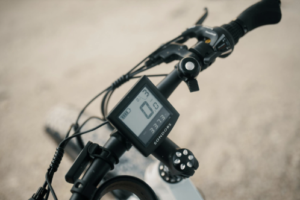
Last year, SB 455 was proposed, focused on clarifying e-bike classifications and enforcement tools. However, SB 455 did not advance and has been returned to the Secretary — meaning it is no longer moving forward this session.
(I’ll need to find a new Magic 8 Ball since my previous post on the matter claimed it was “widely expected to pass and go into effect in July 2026.” Darn ball.)
In other words: SB 455 stalled. AB 1942 is the bill currently active in the conversation.
Check out the side-bar for Poli-sci refresher on how a bill becomes a law in California.
How a California Bill Becomes Law
Most bills are decided entirely by the Legislature (the Assembly and Senate). If they pass both houses and the Governor signs the bill, it becomes law.
The Process
Throughout the process below, a bill can be amended (significantly), be rejected, or quietly stalled in committee.
- Committee Hearings
Before even being voted on by the full Assembly, bills usually go to one or more legislative committees. Lawmakers in those committees can amend the bill or vote it down.
- Assembly Floor
Even if it passes committee, it still has to be approved by the full Assembly.
- Senate (Second House)
If it clears the Assembly, it moves to the Senate — where it must also pass committee(s) and then the full Senate.
- Governor’s Desk
If both houses pass it, the Governor can sign it into law or veto it.
Do Voters Decide On a Bill?
Usually, no. Regular legislative bills, like AB 1942, do not automatically appear on the November ballot. Only constitutional amendments or citizen-initiated ballot measures go directly to voters.
AB 1942 is a standard statute, not a ballot measure. However, if a large number of signatures within a set time frame are collected, a referendum is possible. That means the law could be referred to the ballot after it is passed.
What AB 1942 Will Do
Here’s a straightforward summary of what AB 1942 proposes.
- Registration & license plates: Owners of Class 2 and Class 3 electric bicycles would be required to register their bikes with the DMV and display a special license plate issued by the department.
- Proof of ownership: Riders would need to carry documentation that shows ownership and matches the bike’s serial number.
- Fines for non-compliance: Operating a Class 2 or Class 3 e-bike without registration and the special plate could be treated as an infraction, with fines that increase for subsequent violations.
- Electric Bicycle Registration Fund: The bill would create a special fund to collect and manage fees tied to registrations and the program itself.
Again, these are proposals — not current law.
Why Class 2 and 3?
California classifies e-bikes into three categories:
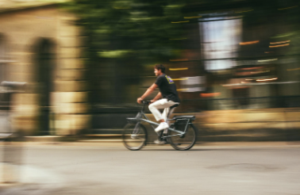
- Class 1: Pedal-assist only, up to 20 mph
- Class 2: Equipped with a throttle and/or pedal-assist, up to 20 mph
- Class 3: Pedal-assist only, up to 28 mph
AB 1942 focuses on Class 2 and Class 3 models, which are commonly used for commuting and higher-speed travel.
(If you’d like a deeper dive into how California defines e-bike classifications, see: Can My Child Ride an E-Bike?.)
What’s The Public Saying?
Supporters
- Registration could improve accountability for higher-speed e-bike use.
- Visible license plates may make enforcement more straightforward than relying solely on serial numbers.

Critics
- Registration could introduce new costs and administrative requirements for riders.
- Additional enforcement mechanisms may raise concerns about equity and access.
The critics say that this bill reflects a broader statewide conversation about safety, infrastructure, sustainability, and how e-bikes fit into California’s transportation future.
Want to learn more about the opposing arguments?
Why This Matters
Any shift in how e-bikes are regulated can affect riders, enforcement practices, and potentially how accidents or citations are handled. Whether AB 1942 moves forward or not, it signals that Sacramento is actively evaluating how higher-speed e-bikes should be treated under California law.
For now, the best thing riders can do is stay informed.
And yes – I may need to create an “E-Bike News” template at this rate. There’s clearly no shortage of developments in this space.
If You’re Injured While Cycling, Contact Paceline Law
By riding in a paceline, cyclists reduce wind drag by up to 50%. Hiring a lawyer should work the same way—reducing friction and making the legal process smoother.
If you’ve been injured in a bike or e-bike accident, I’m here to advocate for you and take on the headwinds of your legal challenges. Let’s move forward together.