
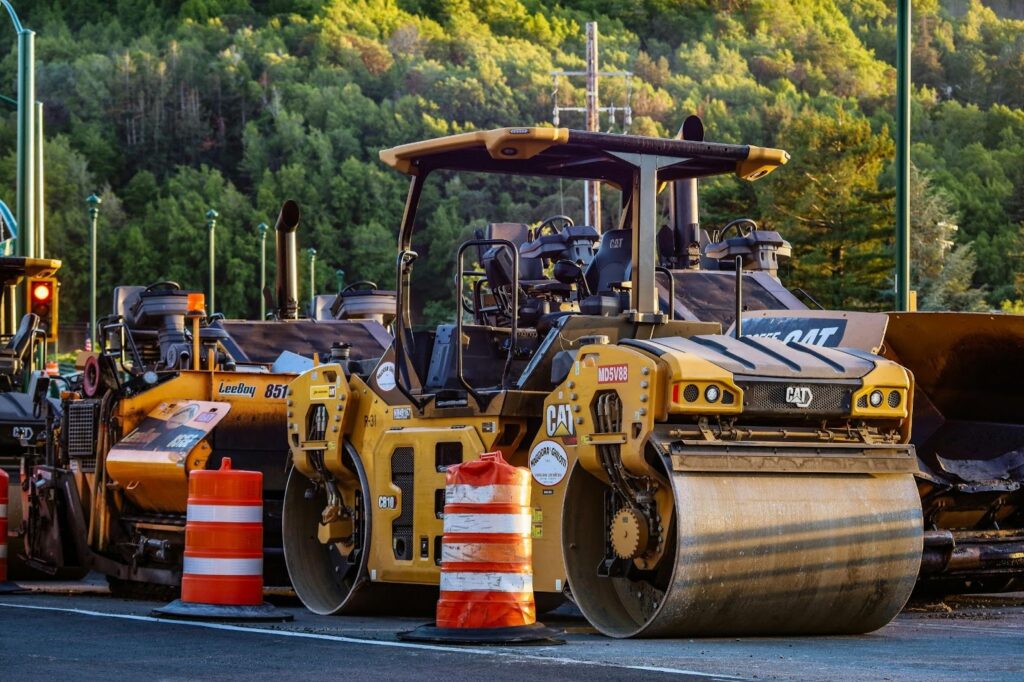
You’re riding in your nice, predictable bike lane… and then suddenly:
 Orange cones.
“Lane Closed” signs.
A trench where your bike lane used to be.
Construction happens. But when a bike lane disappears, what are your rights – and what should you do?
Here’s what California cyclists need to know.
1. Is It Legal to Ride in Traffic When a Bike Lane Is Closed in California?
Yes.
Under California Vehicle Code Section 21208, cyclists may leave a bike lane when reasonably necessary to avoid unsafe conditions, including construction or roadway hazards.
You are not required to squeeze between cones and parked cars.
If the bike lane is unavailable, you can:
- Merge into the travel lane
- Take the lane when needed for safety
- Ride predictably and visibly
That’s not being aggressive. That’s following the law.
2. What Should You Do Immediately When a Construction Zone Blocks Your Bike Lane?
Prioritize visibility and predictability.
- Signal early before merging
- Take the lane deliberately (don’t hug the edge)
- Make eye contact when possible
- Slow down and scan for uneven pavement or drop-offs
Most drivers are reacting to the sudden change, too. Clear movements reduce risk.
3. Are Construction Companies Required to Provide Safe Bike Detours?
Generally, yes.
Cities and counties issue permits for roadwork that typically require traffic control plans. Those plans are supposed to address how all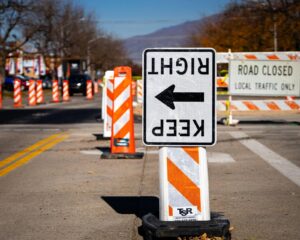 roadway users – including cyclists – move safely through or around the project.
When traffic control is poorly designed or improperly implemented, liability can come into play.
Examples of this include:
- No warning signage
- Sudden forced merges with no taper
- Dangerous pavement edges
- No marked detour
4. Who Is Responsible If You Crash Because a Bike Lane Was Closed?
It depends on the facts – but responsible parties may include:
- A private construction contractor
- A subcontractor
- The public agency overseeing the project
- A negligent driver
If a government entity is involved, the California Government Claims Act usually requires that a formal government claim be filed within six months of the injury – in contrast to the standard two-year personal injury statute of limitations in California.
Construction cases involving public agencies move quickly and require early investigation.
Public entities also have certain legal immunities. For example, California Government Code Section 831.4 (often called “Trail Immunity”) can protect a city or county from liability for certain trail-related injuries. Whether that applies depends heavily on where and how the crash occurred.
You can read more about Trail Immunity in my blog post: “Bicycle Injuries on Bike Paths: Overcoming Trail Immunity”.

5. What Should You Document After a Construction-Related Bike Crash?
Evidence can disappear fast once a project advances.
If you’re physically able:
- Photograph the construction area
- Capture signage (or lack of it)
- Document pavement gaps, drop-offs, or debris
- Get the contractor’s name from trucks or fencing
- Obtain witness information
Construction zones change daily. What caused the crash today may be gone tomorrow.
Why This Matters in the East Bay
From Lafayette to Walnut Creek to San Ramon, infrastructure projects are constant. Growth is good – but safety planning has to keep up.
Cyclists shouldn’t be forced into unsafe merges because a bike lane vanished without warning.
If you were injured in a construction zone because of poor traffic control, inadequate signage, or dangerous conditions, it’s worth understanding your options sooner rather than later.
The cones may be temporary.
Your injuries aren’t.
And even when the bike lane disappears, you still have the right to ride safely on the road.
If You’re Injured While Cycling, Contact Paceline Law
By riding in a paceline, cyclists reduce wind drag by up to 50%. Hiring a lawyer should work the same way—reducing friction and making the legal process smoother.
If you’ve been injured in a bike or e-bike accident, I’m here to advocate for you and take on the headwinds of your legal challenges. Let’s move forward together.